
Live now Algorithm Overland Kitchen Cube Ends Nov 4 Back it now →
Home  /  Gear Guides  /  Toyota Sequoia
Gear Guide · Toyota Sequoia

Toyota Sequoia Cargo Dimensions & What Fits

Behind the second row (third row folded), the 3rd Gen Toyota Sequoia (2023–) cargo area is about 44.9 in long, 56.0 in wide and 34.0 in high, with 50.0 in between the wheel wells. Below: payload, a to-scale 3D model and what overland gear fits.

Sequoia Cargo Size Options

Cargo-area dimensions behind the second row for every Toyota Sequoia in our reference data, in inches. Each generation links to its details below.

GenerationCargo length (in)Width (in)Width between wheel wells (in)Height (in)
3rd Gen (2023–)44.956.050.034.0

Converted from the same millimeter reference data as the 3D model below (1 in = 25.4 mm). Approximate — verify against your exact model year and trim.

The Numbers

Reference cargo-area dimensions behind the second row of the 3rd-gen (2023–) Sequoia, third row folded. Every gear-fit call on this page is computed from these.
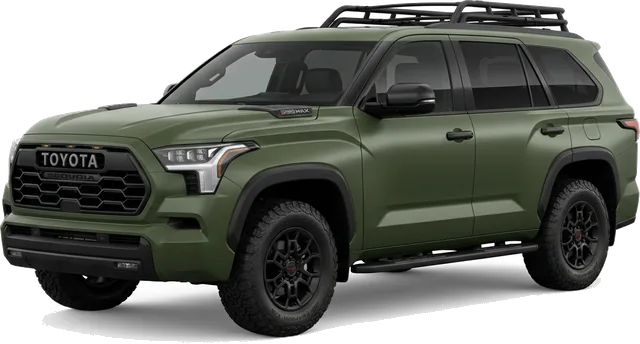
Toyota Sequoia
Sequoia Cargo Area · To-Scale 3D Model Reference data

Drawn to scale from reference cargo dimensions.

Dimensions are approximate and sourced from measured references — verify against your exact model year and trim before purchasing gear. Payload includes passengers and accessories; check your door-jamb sticker.
3rd Gen Sequoia (2023–) Cargo Dimensions

Behind the second row, with the third row folded, the 3rd Gen Sequoia (2023–) cargo area measures about 44.9 in long, 56.0 in wide and 34.0 in high, with 50.0 in between the wheel wells. Payload is about 1,554 lb (705 kg).

What Actually Fits

A realistic overland load against the Sequoia's 705 kg (1,554 lb) payload budget — sized for an SUV cargo area.

Sample overland build

    Width is the Sequoia's advantage. With the third row folded there's about 1270 mm (50.0 in) of floor between the wheel arches — the widest of any SUV in these guides after the Land Cruiser 200 Series — and 1140 mm (44.9 in) of length, so a fridge and a drawer module can sit side by side. Payload is 705 kg (1,554 lb), less than a 3rd-gen Tundra's 898 kg, and a full family uses a lot of it — weigh the people before the gear.

    Built for This Space

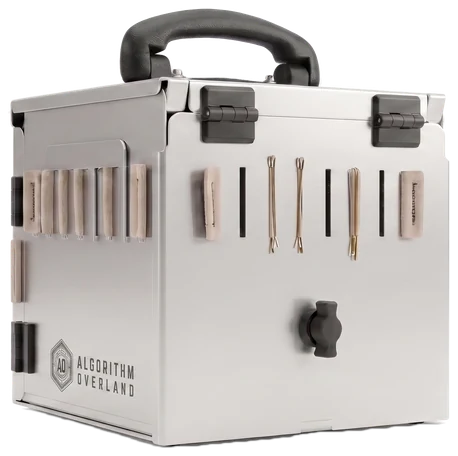
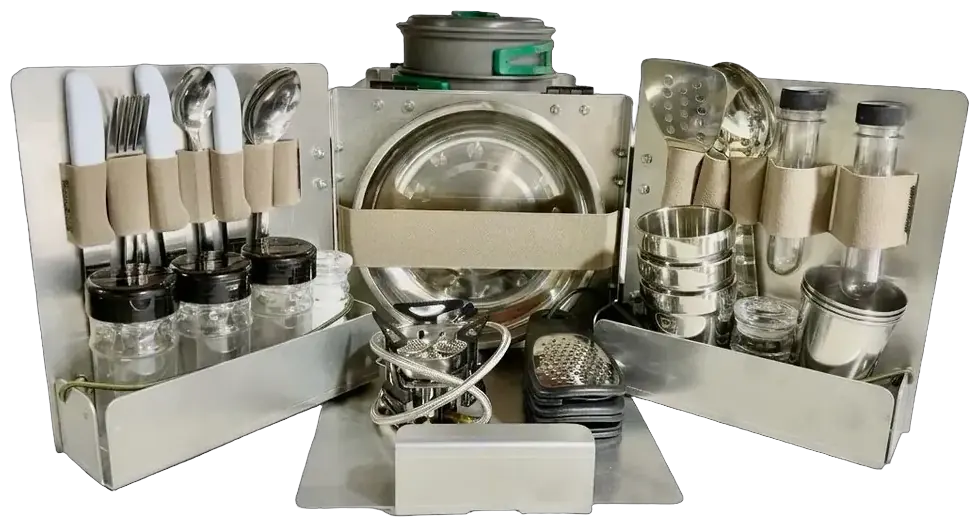
    Algorithm Overland Kitchen Cube — modular aluminum camp kitchenThe Algorithm Overland Kitchen Cube opened into a camp kitchen with the Pro Overlander kit
    Algorithm Overland Kitchen Cube

    The Algorithm Overland Kitchen Cube is a modular, aircraft-grade aluminum camp kitchen that packs down to a compact 12 × 12 × 12 in (305 mm) cube to live in your cargo area, and deploys on the tailgate.

    In the Toyota Sequoia 3rd Gen (2023–), the packed cube sits on the cargo floor behind the second row, uses only 305 mm of the 1140 mm floor length and leaves about 22.0 in (559 mm) of height above it — it fits the cargo area with room to spare.

    Exact fitment specs for every bed are in the guide above. On sale now on Kickstarter until November 4.

    Sequoia Cargo FAQ

    What are the Toyota Sequoia cargo dimensions?

    Behind the second row, with the third row folded, the 3rd-gen (2023–) measures about 1140 × 1422 × 864 mm (44.9 × 56.0 × 34.0 in) — roughly 1387 L (49.0 cu ft), with about 1270 mm (50.0 in) of floor between the wheel arches. Verify against your exact trim before buying gear.

    How much can a Toyota Sequoia carry?

    Payload for the 3rd-gen is about 705 kg (1,554 lb) — including passengers and accessories, not just cargo. In a three-row SUV the people can use much of that, so check the door-jamb sticker and weigh your load.

    Will a fridge fit in the back of a Sequoia?

    Yes. Most 40–75 L fridges are 445–935 mm long and you have about 1140 mm (44.9 in) of floor with the third row folded, so even a large one sits lengthways, and the 1270 mm (50.0 in) between the arches leaves room beside it.

    Does the Algorithm Overland Kitchen Cube fit a Toyota Sequoia?

    Yes, easily — the 12-inch (305 mm) packed cube leaves about 559 mm (22.0 in) of height above it in the 3rd gen.

    All gear guides →